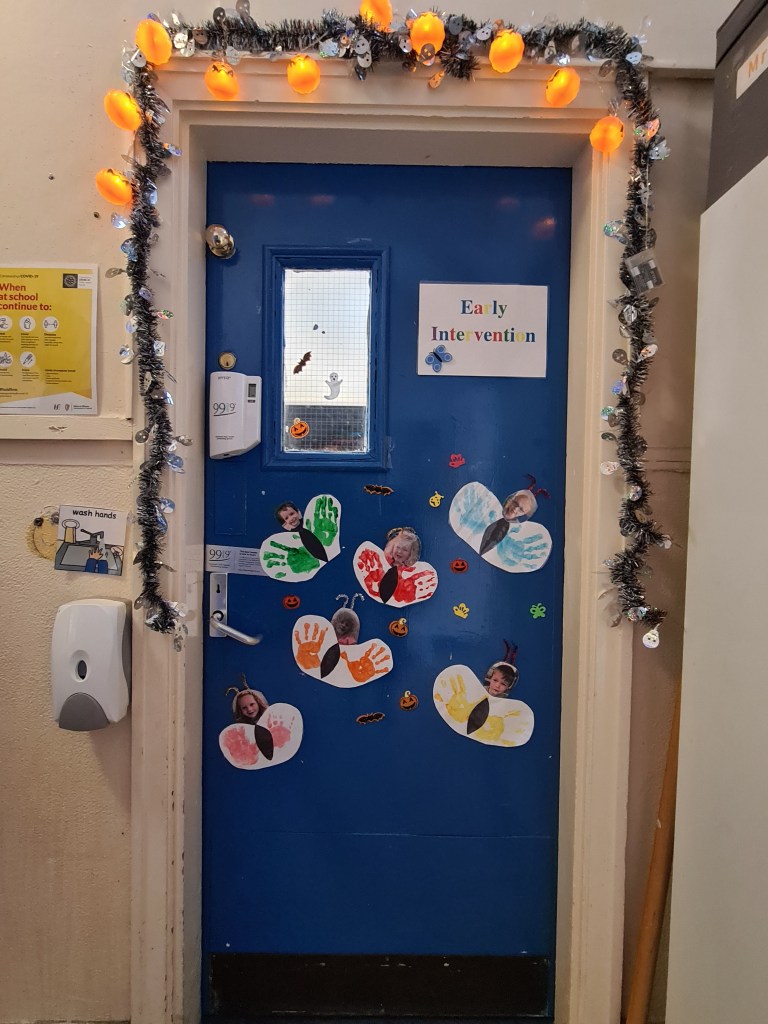
Early intervention classes for children with autism are pre-school classes situated in
mainstream primary schools or in special schools. They are established by the National
Council for Special Education (NCSE) in response to an identified need in a locality and
following engagement between the NCSE, the school, families of pre-school children with
autism and the Department of Education.
The school’s board of management has overall responsibility for the early intervention
classes, and the school receives an additional teaching post and two special-needs
assistants (SNAs) for the class. The school can access further resources through the NCSE,
including training, transport and additional school accommodation, if required. The duration of the school day is the same as the infant day in primary schools (four hours and forty minutes), but a school may, in consultation with parents, reduce the amount of daily time a child spends in the class, based on their age and stage of development.
Early intervention classes are designed to provide a range of appropriate educational
experiences and interventions to children with autism prior to commencing school. The
classes are also intended to provide early interventions to children so that many of them can transition to mainstream primary school with their peers. However, data available from the NCSE indicates that almost eighty-eight percent of children who attend an early intervention class for children with autism are still in a special class or a special school two years after commencing primary school, while just over one-tenth of children who attend early intervention classes do not continue in special class provision (DES, 2024).
 St.Eithne's gns